While geothermal systems may be complex to install, owning one isn’t difficult. You’ll enjoy lower system maintenance and higher efficiency over traditional HVAC systems with geothermal heating and cooling. Our geothermal maintenance checklist covers the few homeowner tasks and all the professional HVAC technician tasks you’ll need to protect your investment each year.

How Often Should You Schedule Professional Geothermal Maintenance?
In regions with mild weather, geothermal systems may only need a professional tune-up once per year, especially for closed-loop systems that do not experience extreme temperature swings.
Indiana’s climate is different. Geothermal systems here run through long heating seasons and increasingly hot summers, and they benefit from two seasonal checkups. Spring prepares the system for heavy summer cooling and humidity. Fall prepares it for long heating cycles and freezing winter temperatures.
Year-Round Geothermal Maintenance Homeowner Tasks
Check Your Filter
Depending on your filter size, you may need to change your filter more or less often. Here is a general rule of thumb:
- 1-2 inch filters should be changed every 1–3 months
- 3-4 inch filters need replacement every 6–9 months
- 5-6 inch filters can last 9–12 months
The exact frequency depends on factors like household size, pets, and usage, so it’s best to check the filter visually once a month and replace it if it’s dirty.
Spring Geothermal Maintenance Homeowner Tasks
Set the Thermostat
When you switch to cooling, set your thermostat to Cool and keep the fan on Auto so the system can manage humidity correctly. Geothermal systems operate most efficiently with steady temperatures, so avoid large jumps in setpoints or quick cool-down strategies. Sudden changes can extend run times and cause the system to behave less efficiently.
Maintain Space Around the Unit
Clear a few feet of space around the indoor unit by moving stored items and boxes. Mechanical areas tend to collect clutter over winter. Opening up the area prevents airflow restrictions and helps technicians access the equipment safely.
Walk Horizontal Loop Fields After Major Storms
While the loops should be buried deep enough (4-6 feet) to avoid harm from normal weather conditions, soil settling or erosion can expose your loops to damage. As a general rule, you shouldn’t be able to see your loops. Call a professional if you see unusual wet or muddy spots in your yard, especially near the loop connection point, as these can signal a leak.
Spring Precision Comfort Systems Tune-up
During your spring preventive maintenance, our technicians perform an 18-point tune-up, including:
- Changing the filter
- Cleaning the blower wheel
- Cleaning the indoor coil
- Cleaning the heat pump cabinet and internal compartments
- Verifying the entering water temperature (EWT) and the leaving water temperature (LWT)
- Checking the loop flow rate and the circulator pump performance
- Inspecting hoses, valves, and the flow center operation
- Checking refrigerant pressures, superheat, and subcooling
- Confirming compressor performance and startup behavior
- Testing thermostat staging and cooling operation
- Testing reversing valve function
- Testing safety devices and checking for any system lockouts
- Verifying the cooling temperature split across the coil
- Checking airflow, duct condition, and static pressure
- Inspecting and tightening electrical connections
- Measuring voltage and amp draw
- Cleaning and verifying the condensate drain for proper flow
- Inspecting desuperheater operation (if equipped)
Fall Geothermal Maintenance Homeowner Tasks
Set the Thermostat
When nighttime temperatures drop, and you switch the thermostat to “Heat,” make sure it’s not in “Emergency Heat” mode. Instead of dialing the temperature down when you leave the house, maintain the thermostat at a steady temperature and only make small adjustments of a few degrees to avoid forcing the system into the emergency (or auxiliary) heat mode that will run up your utility bill.
Check Air Vents and Returns
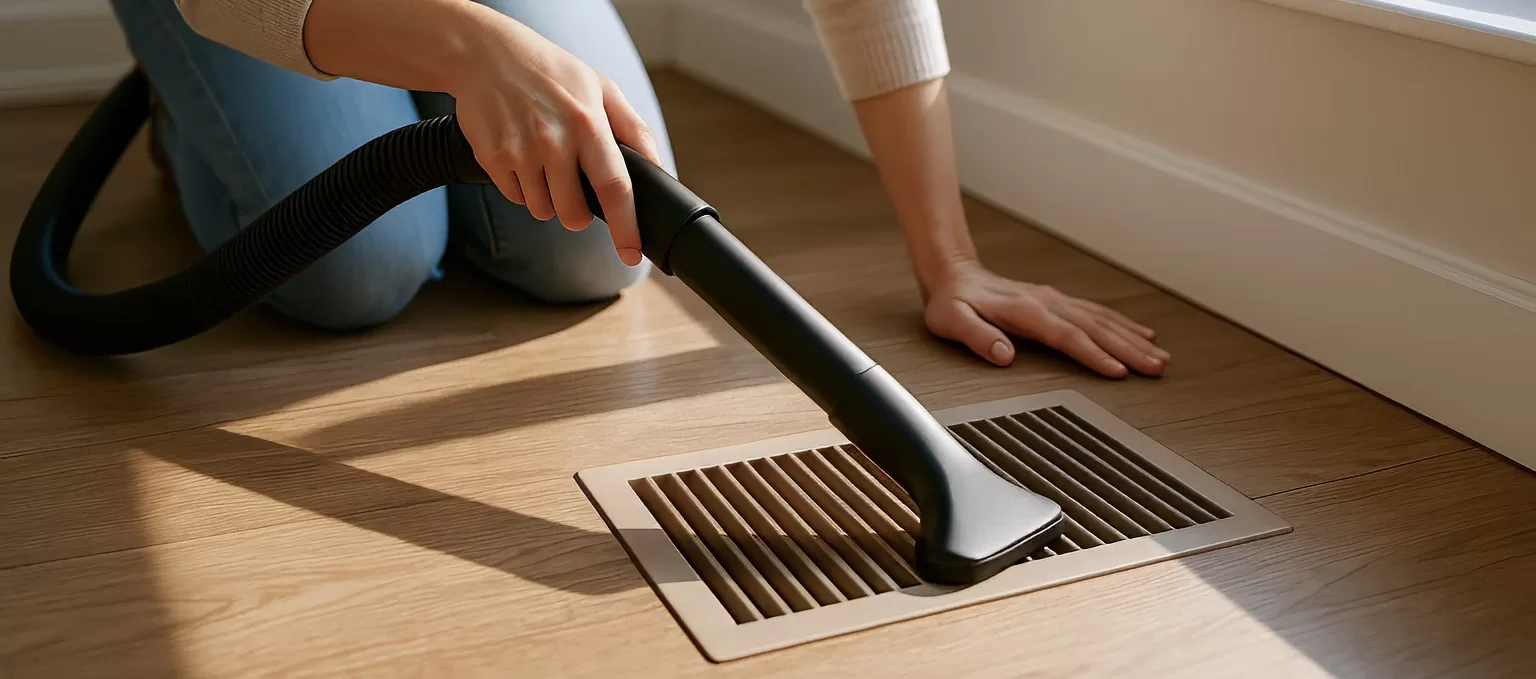
Walk through each room and make sure furniture, rugs, or drapes don’t block vents. Vacuum dusty return grilles to keep them from pulling debris back into the system. Keeping vents open and clear helps your furnace heat evenly, avoids hot and cold spots, and reduces strain on the blower motor.
Observe the Loop Area and Outdoor Unit Before Winter
Walk the loop field before the ground freezes and note any soil settling, landscaping changes, or new low spots. Open-loop homeowners may also want to take a brief look at their discharge water for noticeable changes in clarity or sediment. Rake and remove all leaves, grass clippings, and other debris within a minimum of two to three feet of the unit’s base and sides to allow for efficient airflow.
Fall Precision Comfort Systems Tune-up
Similar to your spring geothermal maintenance, our technicians perform an 18-point tune-up, including:
- Changing the filter
- Cleaning the blower wheel
- Cleaning the indoor coil
- Cleaning the heat pump cabinet and internal compartments
- Verifying entering water temperature (EWT) and leaving water temperature (LWT)
- Checking the loop flow rate and the circulator pump performance
- Inspecting hoses, valves, and the flow center operation
- Checking refrigerant pressures, superheat, and subcooling
- Confirming compressor performance and startup behavior
- Testing thermostat staging and heating operation
- Testing the reversing valve and mode switching
- Testing safety devices and verifying system lockouts
- Measuring the heating temperature rise across the coil
- Checking airflow, duct condition, and static pressure
- Inspecting and tightening electrical connections
- Measuring voltage and amp draw
- Checking antifreeze concentration (closed-loop systems) or evaluating water quality for scaling/mineral concerns (open-loop systems)
- Inspecting desuperheater operation (if equipped)
Schedule Your Geothermal Tune-Up with Indiana’s Geothermal Leader
Precision Comfort Systems designs, installs, and services geothermal heating and cooling systems across Greater Indianapolis and throughout Central Indiana. Our team includes Indiana’s most experienced geo technicians, and we treat your system like our own. We measure what matters, explain everything in plain language, and tune the system so you feel the difference in every room and in every season.
Ready to schedule your spring or fall geothermal tune-up? Contact Precision Comfort Systems today to keep your geothermal system efficient, quiet, and dependable all year.